

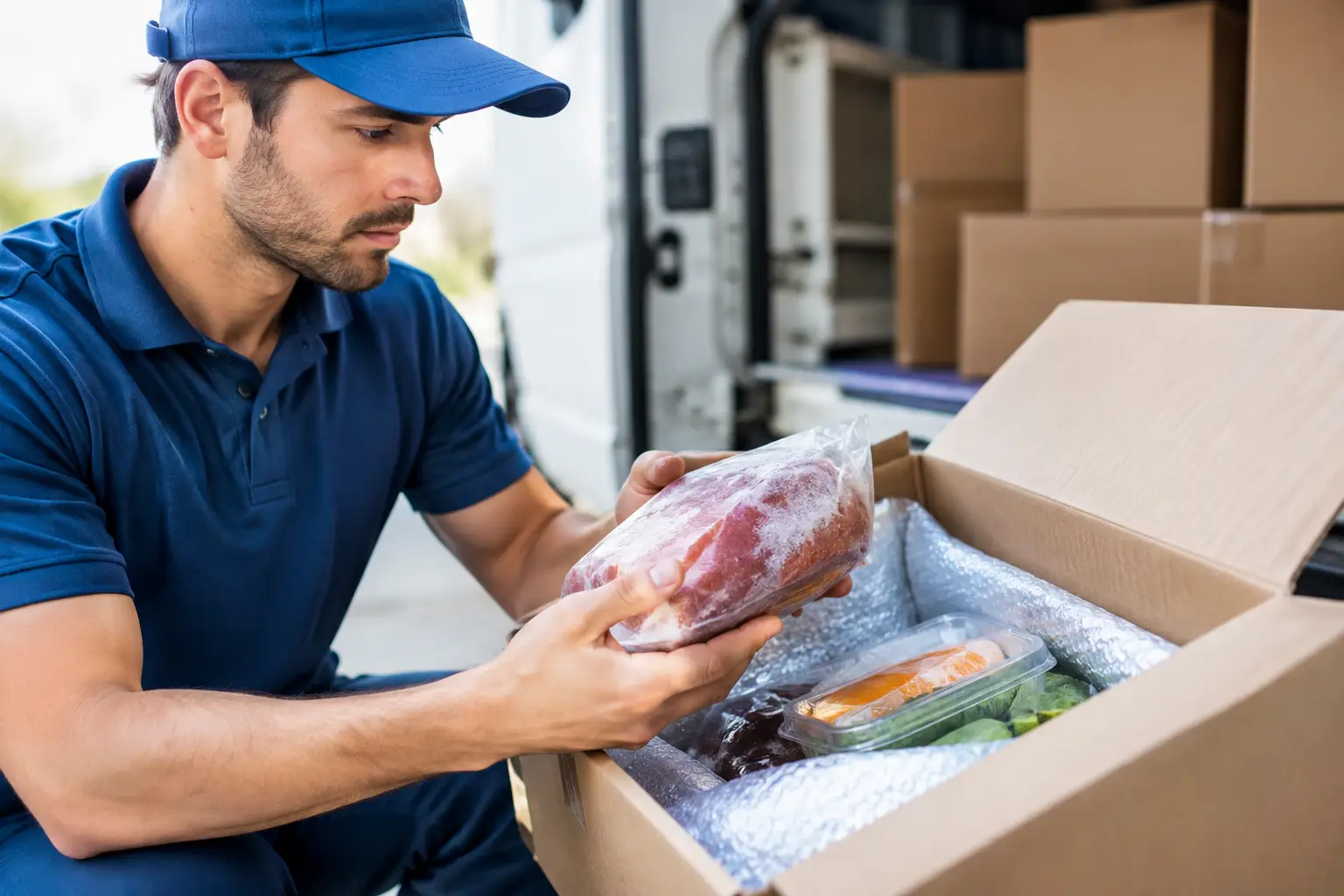
Learn why products spoil in transit, where cold-chain control breaks down, and how live monitoring and disciplined workflows prevent costly product loss.
A chilled shipment can leave a facility at the correct temperature and still arrive unfit for sale. The reason is rarely one dramatic equipment failure. Why products spoil in transit usually comes down to small control gaps: an extended loading delay, a reefer unit running without verified setpoints, a door left open during an unplanned stop, or a temperature excursion that nobody sees until delivery.
For food, pharmaceuticals, biologics, flowers, specialty chemicals, and other sensitive goods, transit is not a passive handoff between warehouse and customer. It is a chain of operating conditions that must remain within specification. When that chain is managed through phone calls, paper logs, and after-the-fact claims, spoilage becomes expensive, hard to investigate, and difficult to prevent.
Why Products Spoil in Transit
Spoilage begins when a product's required storage conditions are not maintained for the time it is exposed. Temperature is the most visible factor, but humidity, airflow, handling, packaging integrity, dwell time, and traceability matter as well. A product can remain within a nominal temperature range at delivery yet have suffered enough cumulative exposure during the journey to shorten shelf life or fail quality release.
The operational challenge is that products do not experience an average temperature. They experience actual conditions at every point in the journey. A truck may report a compliant air temperature while pallets closest to the door warm repeatedly during multi-drop deliveries. A data logger may confirm an excursion, but if it is retrieved only at the end of the route, the team has no chance to intervene while the load is still recoverable.
This is why cold-chain performance should be treated as an execution discipline, not simply a transport vendor requirement. The question is not whether a vehicle has refrigeration. It is whether the organization can prove the shipment stayed within defined conditions, identify exceptions as they happen, and assign accountability across warehouse, carrier, driver, and consignee operations.
The Failure Points That Create Spoilage
Poor handoffs at loading and receiving
The highest-risk period is often not the road journey. It is the transition between controlled environments. Goods may wait on a staging floor while documentation is checked, vehicles may arrive before dock capacity is available, or a driver may be delayed while the cargo area is exposed to ambient heat.
In hot and humid operating environments, even short uncontrolled dwell times can matter. This is especially true for products with strict temperature limits or a limited remaining shelf life. If loading teams do not scan the shipment, confirm product temperature, record seal status, and verify the vehicle condition before dispatch, the organization loses the baseline needed for a defensible investigation later.
Receiving creates a similar risk. A customer may not have staff ready to unload, causing product to remain in a vehicle with frequent door openings. Without a time-stamped arrival, unloading, and acceptance workflow, teams may argue about where the excursion occurred rather than resolve the underlying process failure.
Incorrect temperature settings and sensor placement
A reefer unit can be working correctly against the wrong setting. Different products require different ranges, and mixed loads introduce additional complexity. A setpoint suitable for one SKU can damage another, particularly when chilled, frozen, and ambient-sensitive products are handled in the same network.
Sensor data must also represent the product risk, not merely the equipment status. A sensor placed near the evaporator or air return can show a stable result while product at the rear door experiences repeated warming. Air temperature, product pulp temperature, and surface temperature each answer different questions. The right measurement strategy depends on the commodity, package design, route duration, and regulatory requirements.
More data is not automatically better. Uncalibrated sensors, inconsistent sampling intervals, and disconnected logger files can create false confidence. Operations teams need defined thresholds, calibration records, and a clear rule for what happens when a reading crosses the limit.
Door openings, route delays, and weak load planning
Every delivery stop changes the thermal profile of the load. Door openings allow warm air to enter, especially during congested urban deliveries or when drivers search for the next pallet. Poor load sequencing can make this worse by forcing unnecessary product movement or extended door-open time.
Route planning therefore affects quality, not just fuel cost and driver utilization. A late departure, traffic delay, failed delivery, or unplanned cross-dock transfer can consume the temperature margin built into a shipment. For short routes with resilient products, the commercial impact may be manageable. For high-value perishables or pharmaceuticals, the same delay can trigger quarantine, laboratory review, rejection, or disposal.
The practical control is to connect transport planning with product rules. Dispatchers should know which loads have narrow temperature tolerances, which customers have strict receiving windows, and which routes require escalation when delays exceed a defined threshold.
Packaging and airflow failures
Packaging protects product only when it is designed for the actual distribution environment. Incorrect insulation, damaged cartons, blocked vents, poor pallet wrapping, and unstable stacking can all undermine refrigeration performance. Cold air must circulate around the load. If cartons are packed too tightly against walls or vents, localized hot spots can develop even when the vehicle system appears compliant.
Packaging decisions also involve trade-offs. More insulation may protect a shipment during a delay but can restrict airflow in a refrigerated vehicle. Additional ice packs or gel packs may improve protection for last-mile delivery but add weight, cost, and handling complexity. These choices should be validated against realistic route conditions, not made only from laboratory assumptions.
Missing evidence and delayed response
A temperature excursion is not automatically a spoiled load. The outcome depends on how far the shipment moved outside specification, for how long, the product's stability profile, and whether the exposure can be verified. The problem is that many organizations lack reliable evidence.
Manual temperature logs can be missed, altered, or recorded after the event. Driver calls may be useful, but they are not an audit-grade record. When warehouse management, fleet tracking, quality assurance, and customer service work in separate systems, the investigation becomes slow and incomplete.
By the time a quality team reviews a logger at destination, the operational window has closed. The load may have been accepted, rejected, returned, or disposed of without a controlled decision. Real-time exception management changes this position. It allows an operator to call the driver, check a door sensor, redirect the shipment to a nearby cold store, notify the customer, or quarantine affected pallets before a wider quality issue develops.
Build a Cold Chain That Can Intervene
Preventing spoilage requires connected controls across the shipment lifecycle. Start by defining product-specific handling rules: approved temperature range, allowed excursion tolerance, maximum dwell time, required sensor type, packaging requirements, and escalation owner. These rules should be available to the people loading, dispatching, transporting, and receiving the goods.
Then digitize the critical events. Capture dispatch confirmation, vehicle pre-cool verification, seal application, loading completion, geofenced departure and arrival, door-open events, temperature readings, delivery proof, and exception actions. The objective is not to create more administration. It is to create a single operational record that teams can use during the journey and auditors can verify afterward.
A connected platform can link IoT telemetry with warehouse tasks, transport milestones, quality holds, and ERP inventory status. For example, when a sensor breaches a threshold, the workflow can notify the operations lead, create an incident record, request driver confirmation, and prevent affected inventory from being released until quality review is complete. This turns a temperature alert into accountable action rather than another unread dashboard notification.
Snapdec deployments are designed around this operating reality: telemetry, workflow automation, warehouse execution, role-based approvals, and audit trails must work together. A sensor alone reports a condition. An integrated workflow assigns the response, preserves the evidence, and closes the loop.
Measure What Actually Reduces Loss
Temperature compliance is necessary, but it should not be the only performance measure. Track excursion frequency by route, carrier, vehicle, product family, and delivery point. Measure cumulative out-of-range minutes, door-open duration, loading dwell time, response time to alerts, rejected-load value, and the percentage of incidents with complete evidence.
These measures reveal whether the problem is equipment, process, partner performance, or product design. If one route has repeated excursions, the answer may be a better vehicle. If incidents cluster at a particular warehouse dock, the answer may be scheduling, staging discipline, or additional cold capacity. If the same issue appears only on multi-drop runs, load sequencing and delivery windows may need to change.
The strongest cold chains do not rely on perfect journeys. They assume delays and exceptions will happen, then build the visibility and decision controls to protect product when they do. That is how transit stops being a blind spot between facilities and becomes a managed part of product quality.
KEEP READING
Want the version that applies to your operation?
Articles only go so far. Book a no-obligation session and we'll walk your process end to end.
Book a demo →